

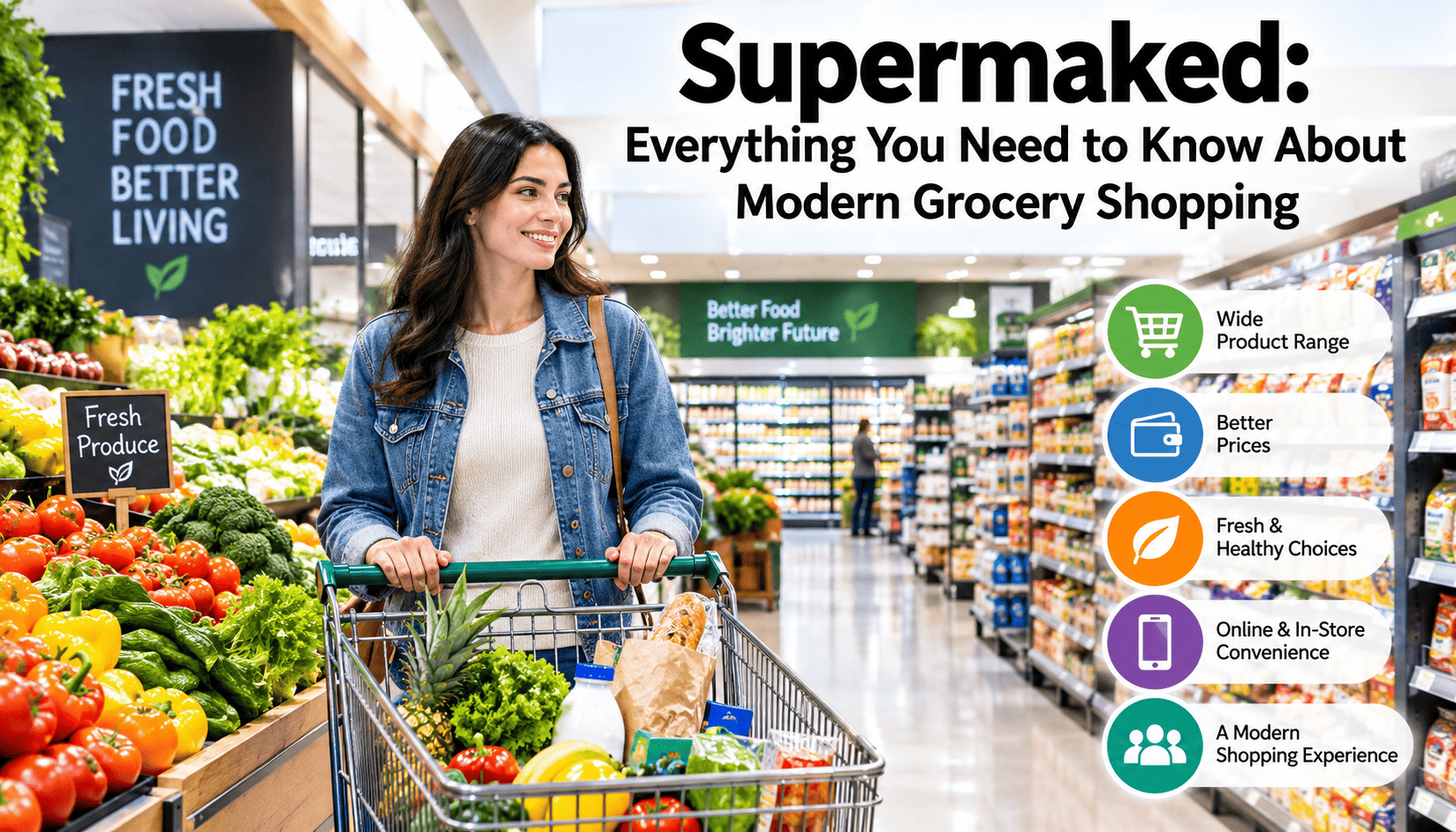
Supermaked is an uncommon term associated with supermarkets, grocery shopping, and online retail discussions. It may be a variation or misspelling of the word “supermarket,” but it can also be used as the name of an online website. Its exact meaning depends on the context in which it appears, so understanding the source is important before assuming it represents a particular business or shopping service.
Introduction
Grocery shopping has changed considerably over the years. What once involved visiting a nearby store, walking through familiar aisles, and paying at a checkout counter can now include online ordering, digital payments, home delivery, and personalized offers. As shopping habits evolve, new terms appear across websites and search results. Some describe genuine retail innovations, while others are brand names, spelling variations, or expressions used primarily online.
One such term is Supermaked. Its resemblance to the word “supermarket” makes it easy to recognize, yet its exact meaning is less straightforward. People searching for it may be looking for a website, an explanation of a new retail concept, or simply the correct spelling of a familiar word. Understanding these possibilities helps readers distinguish established facts from assumptions and explore the topic with greater confidence.
What Is Supermaked?
The meaning of Supermaked depends on where the word appears. In everyday writing, it may be a typing mistake for supermarket, which refers to a large self-service store selling food, beverages, household supplies, and other everyday necessities. However, the spelling may also be used deliberately as the name of an online website or digital publication.
It is important not to assume that every use of the term identifies the same business or service. An unusual word can become a website name without becoming an officially recognized industry term. Similarly, an article discussing modern shopping does not necessarily mean its publisher operates grocery stores, provides delivery services, or owns a retail technology platform. The most reliable interpretation comes from examining the specific website or source where the name appears.
Understanding the Connection With Supermarkets
Supermarkets are an important part of modern retail because they bring many everyday products together in one convenient location. Customers can generally purchase fresh produce, dairy products, packaged foods, cleaning supplies, personal-care items, and other household essentials during a single visit. This arrangement saves time and makes it easier to compare brands, sizes, ingredients, and prices before making a purchase.
The supermarket model also continues to adapt to changing customer expectations. Many retailers now combine traditional stores with digital services, including online catalogues, electronic loyalty programmes, contactless payments, and delivery options. These developments provide useful context for understanding why unfamiliar retail-related terms attract attention online. Nevertheless, modern shopping trends should not automatically be presented as official features of a particular website or company without supporting evidence.
Is It a Website, a Brand, or a New Shopping Concept?
One reason the keyword creates confusion is that it can be interpreted in several ways. First, it may be an incorrect spelling of “supermarket” in an ordinary sentence. Second, it may refer to a website that deliberately uses this unusual name. Third, some online articles use it when discussing convenience-focused grocery shopping and modern retail ideas. These interpretations are related, but they are not interchangeable.
Before treating the name as a recognized company, it is sensible to look for verifiable information. Useful evidence might include identifiable business ownership, official service descriptions, a physical store directory, published contact details, or a documented mobile application. A website’s existence confirms that an online presence uses the name; it does not independently prove that a large retail network or shopping platform operates under it.
How Modern Grocery Shopping Works
Traditional grocery shopping usually begins with a shopping list. Customers visit a store, choose the items they need, compare prices, and pay at the checkout. Although this approach remains popular, digital tools have introduced additional ways to complete the same task. Shoppers can research products online, check availability where retailers provide live inventory information, and sometimes arrange collection or delivery without spending time inside a store.
Digital grocery services typically involve several connected steps. A retailer displays its products in an online catalogue, customers select items and provide payment or checkout information, and the retailer processes the order. Depending on the service, staff may prepare the groceries for collection or a delivery partner may bring them to the customer’s address. These are established retail practices, not verified features that should automatically be attributed to every website using a supermarket-related name.
Important Features of Modern Retail
1. Convenient Product Selection
Well-organized stores make it easier for shoppers to find groceries and household essentials. Clear shelf labels, logical product categories, readable prices, and useful signage can reduce the time required to complete a shopping trip. Online catalogues can provide similar benefits by grouping products into categories and allowing users to search for specific items. Convenience matters most when customers can locate the products they need without unnecessary confusion.
2. Digital Payments and Checkout
Electronic payment methods can make purchasing quicker and more convenient. Depending on the retailer and country, customers may be able to use bank cards, contactless payments, or supported digital wallets. Some stores also offer self-checkout systems. However, payment options vary by business, so shoppers should confirm which methods are accepted before relying on a particular service.
3. Product Information and Price Comparison
Accurate product descriptions help customers make informed decisions. Important details include package size, ingredients, nutritional information, expiry dates where relevant, and the final price. Comparing unit prices can be especially helpful because a larger package is not always the better value. Online shopping can make comparisons easier, although customers should also consider delivery fees, substitutions, and minimum-order requirements.
4. Inventory and Availability
Inventory management helps retailers track the products they have available and identify items that need restocking. Better stock records can reduce the likelihood of customers arriving to find an essential product unavailable. Online inventory systems can offer similar advantages, but availability information is not always updated immediately. Customers should check important details directly with the retailer when an item is urgently needed.
Benefits of Convenient Grocery Shopping
The biggest benefit of a well-organized shopping experience is time savings. When products are easy to locate and prices are clear, customers can complete routine errands more efficiently. Combining several household purchases into one trip may also reduce repeated journeys. For busy families, students, and working professionals, a predictable shopping routine can make everyday responsibilities easier to manage.
Another advantage is better control over household spending. A shopping list, price comparison, and awareness of existing supplies can help prevent unnecessary purchases. Digital catalogues and loyalty offers may provide additional savings when their terms are understood. However, promotions do not always represent the lowest available price, and buying products simply because they are discounted can increase overall spending rather than reduce it.
Convenience can also improve accessibility for people who have limited transportation, busy schedules, or difficulty carrying heavy groceries. Where available, delivery and collection services provide alternatives to visiting a store in person. These options can be particularly useful for large orders, although service charges, delivery coverage, and available time slots differ between providers.
Challenges and Limitations to Consider
Despite the advantages of modern retail, not every shopping experience is equally convenient. Online orders may involve delivery fees, delayed arrivals, unavailable products, or substitutions that do not match a customer’s preferences. Physical stores may have limited stock, crowded aisles, or price differences between branches. Understanding these limitations helps shoppers choose the most suitable method for their circumstances.
Online safety is another consideration when exploring an unfamiliar shopping website. Before sharing personal information or payment details, customers should verify the site’s identity, review its contact and return policies, and look for clear information about the business operating it. A professional-looking website alone does not guarantee legitimacy. Shoppers should be cautious of unusually low prices, unclear payment instructions, and requests for unnecessary sensitive information.
There is also a distinction between convenience and value. Home delivery may save travel time, but fees can make a small order more expensive. Buying in bulk can reduce the unit price, but only if the products will be used before they expire. A sensible approach considers the complete cost, product quality, household needs, and time involved rather than focusing on a single attractive feature.
Why Is the Keyword Appearing Online?
Unusual search terms can attract attention because users want to understand unfamiliar names. A word that resembles a familiar term may prompt searches about its spelling, meaning, origin, or relationship to a website. Once publishers begin creating explanatory content around the query, additional pages may appear in search results, giving the term more visibility.
That visibility should not be confused with proof of widespread commercial adoption. A growing number of online articles does not necessarily mean a new retailer has opened stores or introduced a new technology. In this case, the term does not have a universally established meaning within the grocery retail industry.
For readers, the practical solution is to examine the context of each result. If the word appears in a sentence about buying groceries, it may simply be a misspelling. If it appears in a domain name or website heading, it may identify that particular online property. If an article describes a shopping system, look for independent evidence before accepting claims about its features or commercial reach.
The Future of Grocery Shopping
The future of grocery retail will likely involve a combination of physical stores and digital services. Better inventory systems, more useful product information, convenient payment methods, and flexible collection options can help retailers respond to customer needs. Artificial intelligence may also support demand forecasting and personalized recommendations, although its usefulness depends on responsible implementation and accurate data.
Sustainability is another important consideration. Reducing food waste, improving stock rotation, using efficient refrigeration, and planning deliveries carefully can help grocery businesses manage resources more responsibly. Customers can contribute by planning meals, storing food properly, and purchasing quantities they can realistically use. These practical improvements matter regardless of the name a website or shopping concept adopts.
Whether customers prefer traditional shops or online orders, the central priorities remain similar: reliable products, fair prices, convenience, and trustworthy service. Evaluating a retailer against these standards provides a more useful basis for making decisions than relying on an unfamiliar keyword alone.
Frequently Asked Questions
1. What Does Supermaked Mean?
Supermaked is an uncommon term associated with supermarkets and grocery shopping. It may be a misspelling of “supermarket” or an intentional website name, depending on the context.
2. Is Supermaked a Real Website?
The name is used online, but the existence of a website does not automatically establish that it operates a supermarket chain or grocery delivery service. Its specific activities should be assessed using reliable information.
3. Is Supermaked the Same as a Supermarket?
No. “Supermarket” is the standard English word for a self-service retail store selling food and household goods. Supermaked does not have the same universally accepted definition.
4. How Can Customers Shop for Groceries More Efficiently?
Make a shopping list, compare unit prices, check product availability, set a budget, and choose the shopping method that best suits your schedule. When ordering online, review delivery fees and substitution policies.
Conclusion
Supermaked is an unusual search term that connects to the familiar world of grocery shopping but does not have one universally recognized meaning. It may represent a spelling variation of “supermarket,” an intentional website name, or a term used in online discussions about modern retail. Understanding the context is essential to interpreting it correctly.
Modern grocery shopping continues to evolve through digital ordering, convenient payments, better inventory management, and improved access to product information. These developments offer real benefits, but claims about a specific business should always be supported by reliable evidence.