

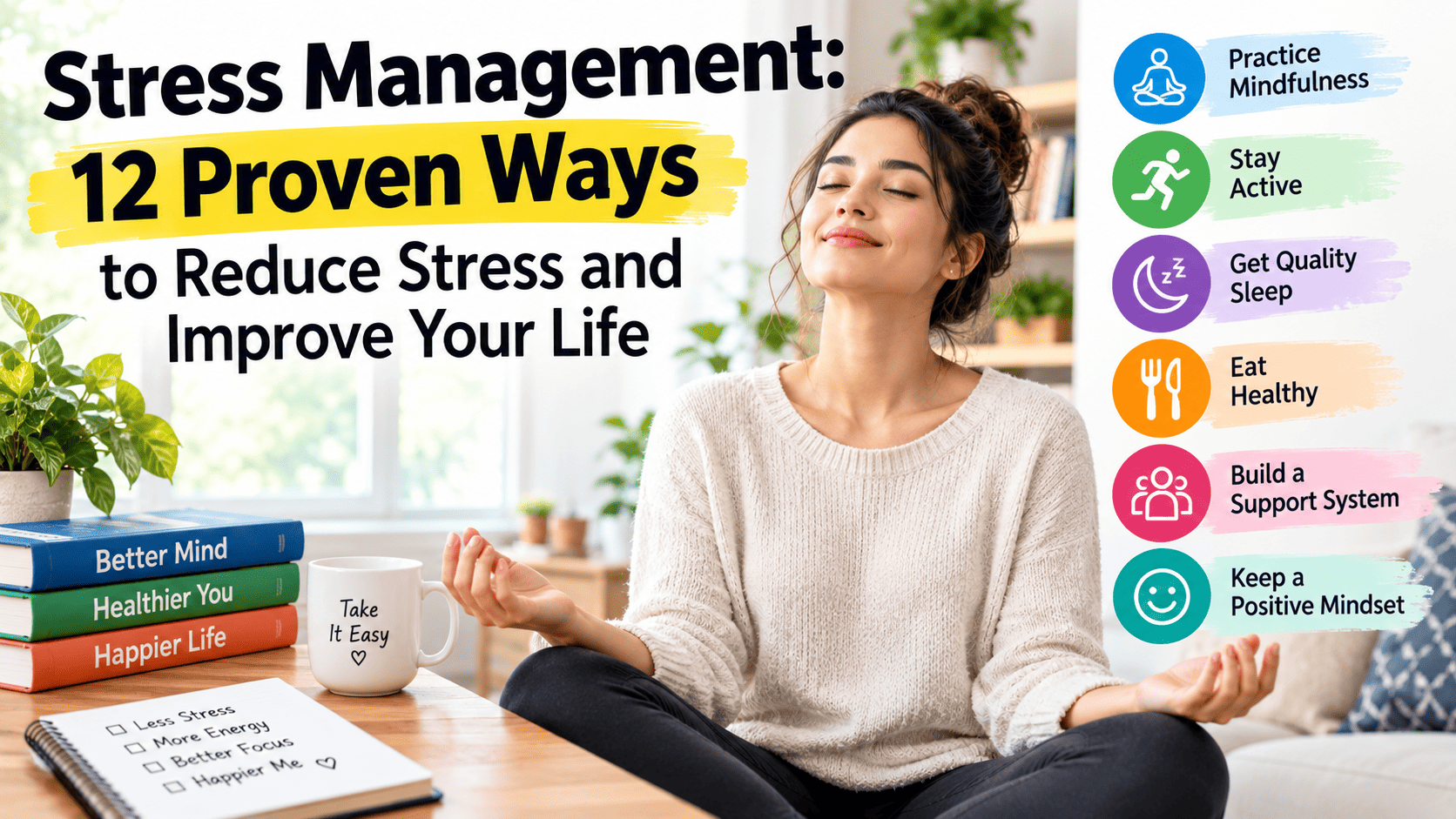
Stress management is the process of recognizing, understanding, and reducing the effects of stress through healthy habits and practical coping techniques. Effective stress management includes regular physical activity, deep breathing, adequate sleep, balanced nutrition, time management, mindfulness, and social support. These strategies can help people handle daily challenges, improve emotional well-being, and respond to difficult situations more calmly and effectively.
Introduction
Stress is a common part of modern life. Work responsibilities, financial concerns, family expectations, academic pressure, relationship difficulties, and uncertainty about the future can all contribute to stress. Although occasional stress can motivate people to solve problems and meet deadlines, persistent stress may interfere with sleep, concentration, relationships, and overall well-being.
The good news is that stress management does not require a complete lifestyle change or expensive equipment. Small, consistent actions can help you respond to pressure more effectively and develop healthier coping habits.
According to the World Health Organization (WHO), practical stress-management skills can help people cope with adversity, and many techniques can be practiced in just a few minutes each day.
This guide explains what stress management means, why it matters, common symptoms and causes of stress, and 12 practical strategies you can begin using today.
What Is Stress Management?
Stress management refers to the methods people use to identify stressors, regulate emotional responses, and cope with challenging circumstances. Rather than eliminating every source of pressure, the goal is to reduce unnecessary stress and improve your ability to handle situations that cannot immediately be changed.
Stress can trigger a natural response that prepares the body to react to perceived threats or challenges. This response may temporarily increase alertness, heart rate, and energy. However, when pressure continues without sufficient recovery, it can become difficult to maintain emotional and physical balance.
Effective stress management generally involves three important steps:
- Identify stressors: Recognize the situations, responsibilities, or thoughts that contribute to your stress.
- Choose healthy coping strategies: Use practical techniques such as planning, exercise, relaxation, and supportive conversations.
- Build sustainable habits: Practice strategies consistently rather than waiting until stress becomes overwhelming.
Everyone experiences stress differently. Therefore, the most effective approach is one that fits your circumstances, preferences, responsibilities, and needs.
Why Is Stress Management Important?
Managing stress supports emotional well-being and helps people respond to everyday challenges more constructively. Although stress cannot always be avoided, learning how to manage it may reduce its impact on daily life.
1. Supports Mental Well-Being
Persistent stress can contribute to irritability, excessive worrying, emotional exhaustion, and difficulty concentrating. Relaxation practices, problem-solving, and social support can help people cope with these experiences more effectively.
2. Encourages Better Sleep
Stress and sleep problems can reinforce each other. Worrying about unfinished tasks or future responsibilities may make it difficult to relax at bedtime.
A consistent sleep schedule, a calming evening routine, and reduced late-day caffeine intake may help support better sleep.
3. Helps Improve Concentration
When your mind is occupied by multiple worries, even simple tasks can feel difficult. Prioritizing responsibilities and breaking large projects into smaller steps can make your workload feel more manageable.
4. Supports Physical Health
Ongoing stress can affect the body in several ways, including muscle tension, headaches, digestive discomfort, and changes in heart rate. Chronic stress is also associated with broader health risks.
Healthy coping habits can help reduce the effects of stress, although they cannot replace medical care when a health problem is present.
5. Strengthens Relationships
Stress may make people impatient, withdrawn, or more likely to misunderstand others. Communicating openly, listening carefully, and asking for support can help reduce unnecessary conflict and strengthen relationships.
Common Causes of Stress
Understanding what causes your stress is an important part of developing an effective stress-management plan.
Work-Related Stress
Heavy workloads, demanding deadlines, job insecurity, workplace conflict, and limited control over responsibilities can create pressure. Setting realistic expectations, taking appropriate breaks, and discussing workload concerns may help.
Financial Stress
Debt, unexpected expenses, rising living costs, and uncertainty about income can make people feel overwhelmed. Creating a basic budget, organizing bills, and identifying manageable next steps may help restore a sense of control.
Academic Stress
Students may experience stress because of examinations, assignments, competition, or expectations from family and teachers. A realistic study timetable, regular breaks, and early preparation can reduce last-minute pressure.
Family and Relationship Problems
Communication difficulties, caregiving responsibilities, disagreements, and major life changes may contribute to emotional stress. Respectful conversations and appropriate boundaries can help people manage these challenges.
Health Concerns and Uncertainty
Illness, changes in personal circumstances, grief, and uncertainty about the future can all be stressful. Talking with someone trustworthy and focusing on manageable actions may help people cope.
Stress does not always have one obvious cause. Sometimes several small pressures accumulate until everyday responsibilities begin to feel overwhelming.
12 Effective Stress Management Techniques
The following techniques offer practical ways to manage everyday stress. You do not need to practice all 12 at once. Start with one or two approaches that feel realistic for your daily routine.
1. Practice Deep Breathing
Deep breathing is a simple relaxation technique that can be practiced at home, at work, or during a stressful moment.
When people feel under pressure, their breathing may become rapid or shallow. Slowing the breath gently can encourage relaxation and help create a pause before reacting.
How to practice:
- Sit comfortably and relax your shoulders.
- Breathe in slowly through your nose.
- Breathe out gently without forcing your breath.
- Continue for one to three minutes, or longer if comfortable.
- Return to normal breathing if you feel dizzy or uncomfortable.
The goal is comfortable, unforced breathing rather than taking unusually deep breaths.
2. Exercise Regularly
Physical activity is one of the practical ways to support stress management. Movement can improve mood, provide a break from worrying thoughts, and support better sleep.
You do not need an expensive gym membership or a demanding workout routine. Choose activities that fit your ability and schedule.
Examples include:
- Walking outdoors
- Cycling
- Swimming
- Dancing
- Stretching
- Playing a recreational sport
Even a short walk during a busy day can provide a useful change of pace. Increase activity gradually according to your fitness and health needs.
3. Maintain a Consistent Sleep Schedule
Insufficient or irregular sleep can make it harder to manage emotions and cope with daily pressure.
To improve your sleep routine, try to:
- Go to bed and wake up at consistent times.
- Create a quiet, comfortable sleeping environment.
- Reduce stimulating screen activities before bedtime.
- Avoid caffeine late in the day if it affects your sleep.
- Allow yourself time to unwind after work or study.
If stress regularly prevents you from sleeping, consider discussing the problem with a healthcare professional.
4. Use Mindfulness and Meditation
Mindfulness involves paying attention to the present moment with curiosity rather than immediately judging every thought or feeling.
Stress often increases when people repeatedly replay past events or imagine worst-case future scenarios. Mindfulness can help you notice these thoughts without automatically reacting to them.
Begin with five minutes of quiet breathing. When your attention wanders, gently bring it back to your breath or the sensations around you.
Meditation is not about forcing your mind to become completely empty. It is about practicing attention and responding to distractions with patience.
5. Improve Time Management
An overloaded schedule can make stress feel constant. Time management helps you identify priorities and reduce the pressure of trying to do everything simultaneously.
Try these practical methods:
- Write down your main responsibilities.
- Identify the most important tasks.
- Break complicated projects into smaller actions.
- Set realistic deadlines.
- Include breaks and recovery time.
- Ask for assistance when appropriate.
For example, instead of writing “finish the entire project” on your task list, divide it into research, outlining, drafting, reviewing, and final submission.
Completing smaller steps can make progress easier to recognize.
6. Eat Balanced Meals and Stay Hydrated
Nutrition cannot eliminate every source of stress, but regular, balanced meals can support general health and help maintain energy throughout the day.
Include a variety of vegetables, fruits, whole grains, protein sources, and other nutritious foods according to your needs.
Drink water regularly, and pay attention to whether caffeine makes you feel restless, anxious, or unable to sleep.
Avoid relying on excessive caffeine, alcohol, smoking, or other substances to manage emotional pressure. These approaches can create additional health problems rather than addressing the underlying cause of stress.
7. Talk to Someone You Trust
Stress can feel more difficult when you try to handle everything alone. Speaking with a trusted friend, relative, colleague, or counselor may help you express your feelings and consider possible solutions.
You do not always need advice. Sometimes explaining what is happening and having someone listen without judgment can be valuable.
When asking for support, be specific about what would help. For example, you might ask someone to listen, assist with a task, or help you think through a difficult decision.
8. Spend Time Outdoors
Time in natural surroundings can provide a welcome break from demanding routines and constant digital stimulation.
Depending on your circumstances, you could walk in a park, sit in a garden, enjoy sunlight safely, or spend a few quiet minutes observing trees and plants.
If outdoor access is limited, opening a window, caring for indoor plants, or looking at natural scenery may offer a small change of environment.
The purpose is to create a restorative pause, not to add another obligation to your schedule.
9. Challenge Unhelpful Thoughts
Stress can make difficult situations seem more threatening or impossible than they really are. Negative thought patterns may increase pressure, particularly when you assume the worst outcome is inevitable.
Cognitive behavioral therapy (CBT) uses structured approaches to help people examine connections between thoughts, emotions, and behaviors.
You can try a simple reflection exercise:
- Identify the stressful thought.
- Ask what evidence supports it.
- Consider whether there are other reasonable explanations.
- Identify one practical action you can take.
For example, replace “I will never finish this work” with “I have several tasks to complete, so I will start with the most urgent one and reassess afterward.”
This is not about pretending every situation is positive. It is about developing a more balanced and useful perspective.
10. Set Healthy Boundaries
Taking on too many responsibilities can increase stress, especially when you feel unable to decline requests.
Healthy boundaries help protect your time, energy, and personal needs.
You might explain that you cannot accept an additional task right now, request more time to complete an assignment, or establish limits around work messages outside working hours when possible.
Setting boundaries does not mean ignoring other people. It means recognizing that your capacity is limited and making realistic commitments.
11. Make Time for Enjoyable Activities
When life becomes busy, people often remove enjoyable activities from their schedules first. However, regular opportunities for rest, recreation, and connection can support emotional well-being.
Consider reading, listening to music, cooking, gardening, drawing, playing games, or spending time with people you care about.
Choose activities because they help you feel engaged or refreshed, rather than turning relaxation into another performance target.
Even a short period of enjoyable activity can provide a useful break from demanding responsibilities.
12. Seek Professional Support When Needed
Self-help strategies can be useful, but they are not always enough.
If stress continues for several weeks, becomes difficult to control, affects your relationships, or interferes with sleep, work, study, or daily responsibilities, consider speaking with a qualified healthcare professional or mental health practitioner.
A professional can help identify contributing factors and discuss suitable options, which may include counseling, psychotherapy, or other treatment when appropriate.
Seeking help is a constructive step, not a sign of personal weakness.
Stress Management at Work
Workplace stress may develop when responsibilities exceed available time, expectations remain unclear, or employees have limited control over their workload.
Individuals can take several practical steps to manage work-related pressure.
Prioritize important tasks. Identify which responsibilities have the greatest impact and complete them before less urgent activities when possible.
Take appropriate breaks. Short pauses between demanding tasks can provide an opportunity to stretch, drink water, and reset your attention.
Communicate early. If a deadline is unrealistic or your workload is excessive, discuss the situation with a supervisor or relevant colleague.
Reduce unnecessary interruptions. Where your role permits, group similar tasks together and set aside focused periods for important work.
Maintain work-life boundaries. Make time for sleep, relationships, recreation, and activities unrelated to your job.
Organizations also have a responsibility to address harmful working conditions. Individual coping techniques should not be treated as a substitute for reasonable workloads, respectful management, and a safe working environment.
Stress Management for Students
Students may face overlapping academic, social, and personal pressures. Effective stress management can help them approach these demands with greater structure.
Create a Realistic Study Plan
Divide subjects into manageable sessions and start preparing before deadlines become urgent. Allow additional time for difficult topics and unexpected interruptions.
Use Short Study Breaks
Take brief breaks when concentration begins to decline. Stretch, walk, or drink water before returning to your work.
Avoid Unhelpful Comparisons
Other students may have different resources, schedules, and learning needs. Focus on your own progress and identify specific areas you can improve.
Prepare for Examinations
Practice questions, revision schedules, and reviewing mistakes can help make preparation more organized. If examination anxiety becomes severe, a teacher, counselor, or healthcare professional may be able to help.
Protect Your Sleep
Late-night studying may seem productive, but regularly sacrificing sleep can make concentration and emotional regulation more difficult.
A sustainable study routine balances preparation, rest, and personal responsibilities.
A Simple Daily Stress Management Routine
A useful routine does not need to be complicated. The following example shows how you might incorporate stress-management habits into an ordinary day.
| Time | Activity | Potential benefit |
| Morning | Spend five minutes breathing calmly and reviewing priorities | Begin the day with a clearer plan |
| Midday | Take a short walk or movement break | Create a pause from work or study |
| Afternoon | Complete one important task before moving to another | Reduce unnecessary multitasking |
| Evening | Connect with someone or enjoy a hobby | Support relaxation and social well-being |
| Before bed | Reduce stimulation and follow a consistent sleep routine | Prepare for rest |
Adapt the schedule to your working hours, family responsibilities, health, and personal preferences. Consistency matters more than following a perfect timetable.
Common Stress Management Mistakes to Avoid
Some coping habits can provide temporary distraction while making underlying problems harder to address.
Ignoring Stress Completely
Pretending that stress does not exist may delay useful action. Recognizing early warning signs makes it easier to identify what needs to change.
Trying to Change Everything at Once
Starting multiple new habits simultaneously can become another source of pressure. Begin with one manageable change and build gradually.
Expecting Instant Results
Stress-management techniques often require practice. One breathing exercise may provide temporary relief, but longer-term improvement usually depends on repeated habits and addressing the causes of stress where possible.
Using Unhealthy Coping Habits
Excessive caffeine, alcohol, smoking, or other substances may seem helpful in the moment but can worsen sleep, mood, or health.
Blaming Yourself for Feeling Stressed
Stress is a normal response to difficult circumstances. The aim is not to eliminate every uncomfortable emotion but to develop healthier ways to respond and seek support when necessary.
When Should You Seek Help for Stress?
Consider professional support if you notice that stress is persistent, worsening, or interfering with ordinary activities.
Warning signs may include:
- Frequent difficulty sleeping
- Ongoing worry or irritability
- Trouble concentrating or making decisions
- Persistent physical discomfort
- Withdrawing from friends and family
- Increasing reliance on alcohol or other substances
- Feeling unable to manage everyday responsibilities
These symptoms can have different causes, so it is important not to assume that stress explains everything.
Seek urgent medical assistance for severe or sudden physical symptoms, such as significant chest pain or serious breathing difficulty, rather than assuming they are caused by stress. If you feel at risk of harming yourself or cannot stay safe, contact local emergency services or seek immediate help from a trusted person and qualified professional.
Frequently Asked Questions About Stress Management
1. What is the best way to manage stress?
There is no single best technique for everyone. Regular physical activity, adequate sleep, deep breathing, realistic planning, social support, and mindfulness are useful options. The best approach depends on the causes of your stress and which strategies you can practice consistently.
2. How can I reduce stress quickly?
Try pausing, relaxing your shoulders, breathing comfortably, and identifying your next manageable action. A brief walk or conversation with a trusted person may also help. These methods can provide short-term support, although they may not resolve the underlying problem.
3. What are the five main stress management techniques?
Five useful techniques are:
- Deep breathing and relaxation
- Regular physical activity
- Consistent sleep habits
- Time management and problem-solving
- Social support and healthy communication
These methods can be combined and adjusted to suit individual needs.
4. Can stress management improve sleep?
Healthy stress-management habits may support better sleep by helping people unwind, maintain a consistent bedtime, and reduce stimulating activities late in the day. However, persistent insomnia may require professional assessment.
5. How does exercise help with stress?
Physical activity can support mood, reduce physical tension for some people, and improve sleep. Walking, swimming, cycling, dancing, and other enjoyable activities can all be practical options.
6. Is all stress harmful?
No. Short-term stress can sometimes increase alertness and motivation when facing a challenge. Problems are more likely when stress becomes excessive, persistent, or difficult to manage.
7. When should I seek professional help for stress?
Consider professional support when stress persists, self-help strategies are not working, or symptoms interfere with sleep, relationships, work, study, or daily life. Seek urgent assistance when there is an immediate safety concern or a serious physical symptom.
Conclusion
Stress management is an important part of maintaining emotional well-being and coping with everyday challenges. Although it is impossible to avoid every difficult situation, it is possible to develop healthier responses and make daily life more manageable.
Start by identifying your main sources of stress. Then choose one or two realistic strategies, such as practicing deep breathing, walking regularly, improving your sleep routine, organizing responsibilities, or talking with someone you trust.
Remember that progress does not require perfection. Small, consistent changes can help you develop more sustainable coping habits over time. If stress becomes persistent or overwhelming, seeking professional support can help you find an approach suited to your needs.
The most effective stress management plan is one that addresses the real sources of pressure while making room for rest, healthy relationships, and the activities that matter to you.